



Unmasking asthma and COPD from exhaled breath
A new inexpensive smart mask to aid personalized monitoring of lung health has been piloted by researchers in the United States.
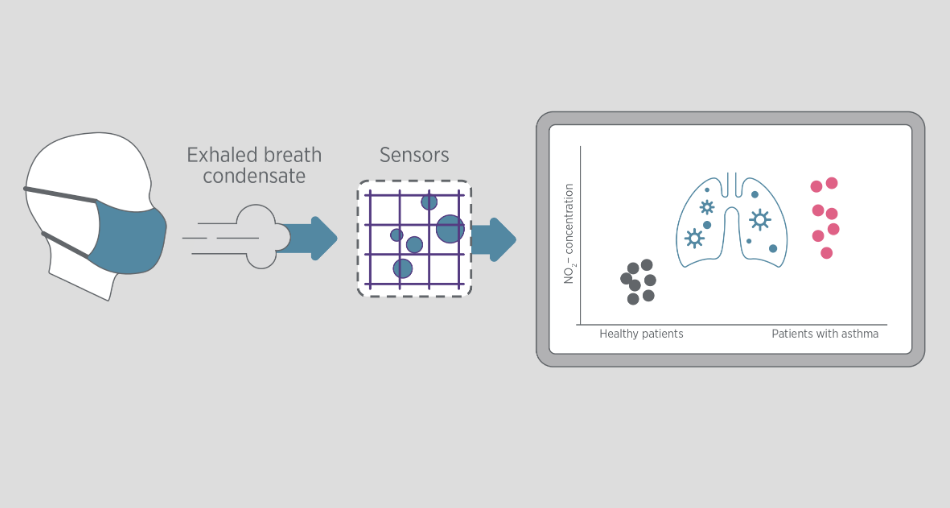
The mask uses an innovative self-cooling system to turn breath into exhaled breath condensate that it then analyzes with an array of sensors. Data are transmitted wirelessly to portable devices, giving real-time insights into lung health. The mask, developed by a team at the California Institute of Technology successfully detected an inflammatory marker in people with asthma. It has the potential for patients to self-monitor their lung health and could reduce the need to monitor inflammation in the clinic.
Respiratory risks predicted from blood tests
A risk score based on 32 proteins from blood samples may detect individuals at risk of severe respiratory disease and complications.
Lung health data were collected from almost 2500 adults in the United States. Over 1000 unique human proteins were screened. The 32 proteins that together best predicted accelerated decline in lung function were compiled into the susceptibility score. This proteomic risk score successfully identified people at risk of death due to respiratory causes, COPD and respiratory exacerbations.

Driving AI in computed tomography for COPD

Wearable patch outperforms digital stethoscope in wheeze detection
A microchip sensor that automatically detects wheezing has been built into a wearable patch by researchers in the United States. It promises to speed up diagnosis and treatment of respiratory diseases.
The highly sensitive chip screens out background noise and allows for tiny variations in wheezes to be detected. When analyzed by a deep learning model, wheezing is more accurately detected than by a digital stethoscope.

Improving asthma management by chatbot
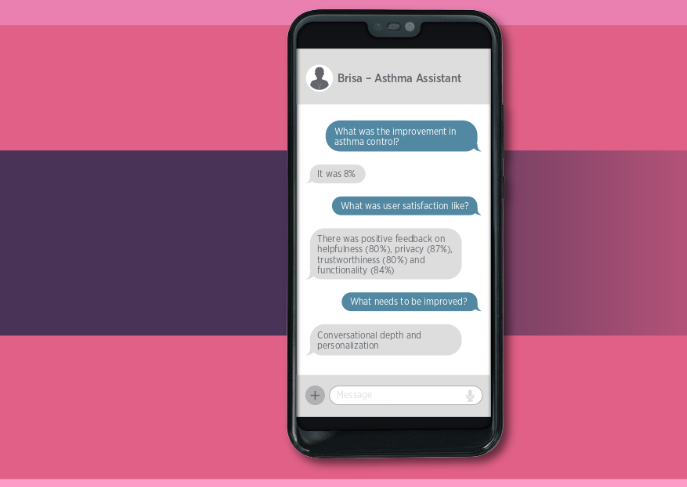
A chatbot named ‘Brisa’ has shown how chatbots can extend the reach of asthma support. The chatbot, developed in the United Kingdom, was designed to help asthma patients’ self-assessment and self-management. It gave information and guidance on the risk of an attack, asthma triggers and management strategies.
Asthma control was improved and users found Brisa to be helpful but wanted it to have more conversational depth.
Planning to tackle wildfire effects on asthma and COPD
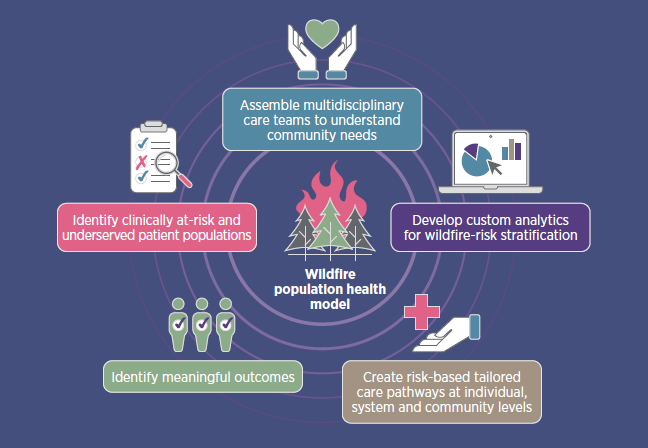
A 5-part population health-based action plan has been developed by the University of California in the United States to lessen health risks from wild fires for people with COPD and asthma.
The plan gives particular attention to underserved populations who are at risk of respiratory disease.
Wearable technology for predicting asthma attacks
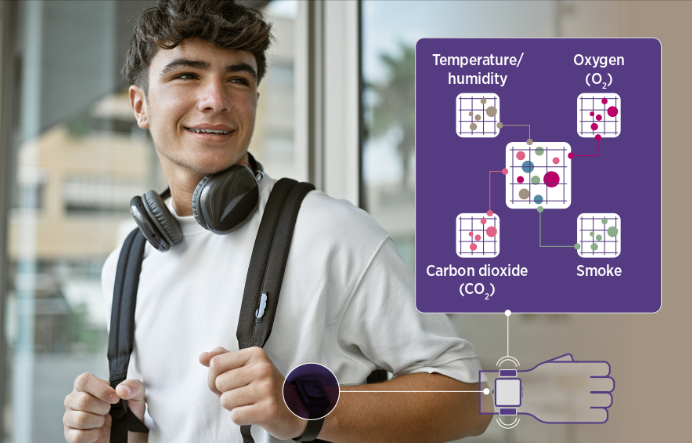
A wearable device integrating AI can provide warnings of impending asthma attacks. The smart armband monitors indicators such as heart rate, oxygen saturationand exposure to specific air pollutants. Onboard AI determines the risk of an asthma attack to give timely notifications. A companion app uses ChatGPT for a user-friendly experience and offers personalized asthma management.
The American University of the Middle East, Kuwait, is working on miniaturizing the armband and testing it in real-world settings with the aim of making it widely available to vulnerable populations.
Supporting respiratory care with software
Software that guides annual reviews for patients with asthma and COPD is being launched in 150 primary care practices across Greater Manchester, United Kingdom, where respiratory outcomes are poor.
Over 2 years, the clinically validated software will be evaluated to see if it improves the quality, effectiveness and consistency of asthma and COPD reviews, reducing the impact of exacerbations.

Early alert system reduces deaths in general medicine unit

Generating collaborations for AI in medical imaging
Mass General Brigham and University of Wisconsin–Madisonin the United States are partnering with Microsoft to advance AI in medical imaging, with the aim to bridge the gap from innovation to patient care. The vast data assets from these centres will be used to fine-tune AI models and should allow shorter development times.
The collaborations will also explore how AI can be incorporated into workflows in ways that are reliable, transparent and secure. The ultimate goal is to increase access to, and quality of, care.

Inclusive representation in clinical research and digital technologies
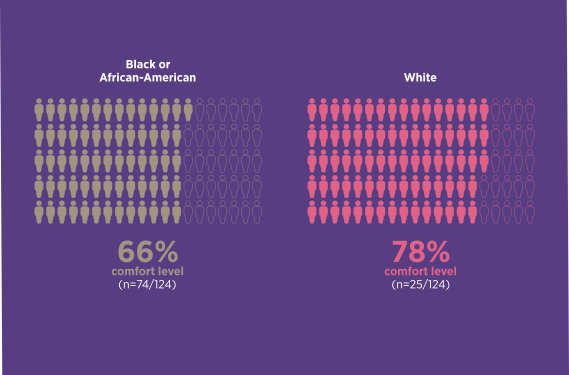
Underrepresentation of racial/ethnic groups in clinical research can affect the safety and efficacy of treatments in these populations.
A survey in the United States gives insights into inclusive approaches in clinical research and use of digital technologies. Most people would be comfortable using digital devices in clinical research, although the comfort level was lower in underrepresented groups.
Strategies that will increase participation of these underserved populations in research are vital.
AI in obstructive sleep apnea
Διαμοιρασμός περιεχομένου